


What is E-Tax in Japan? A Guide For Foreign Residents

E-Tax is Japan's online system for filing tax returns and paying national taxes, run by the National Tax Agency (国税庁, Kokuzeicho). It is now the standard way to file, handling 77% of income tax returns in tax year 2025.
While E-Tax saves you a trip to the tax office, it was built with Japanese speakers in mind. We created this guide to help foreign residents understand how E-Tax works and get set up before the 2027 filing window opens on February 16.
From My Number card logins to fake E-Tax emails, we have your E-Tax questions covered.
What is E-Tax?
E-Tax (イータックス) is the National Tax Agency's online system for filing returns, paying national taxes, and receiving tax office messages. Most individuals use it for their annual income tax return, called kakutei shinkoku (確定申告). They file from a smartphone or computer and log in with a My Number card.
Its official name is Kokuzei Denshi Shinkoku Nozei Shisutemu (国税電子申告・納税システム). You can reach it through the official e-Tax website, which also posts maintenance times and system notices.
What you can do on E-Tax
- File national tax returns. Income tax, consumption tax for sole proprietors, and gift tax returns all go through E-Tax.
- Pay national taxes. Options include direct debit, internet banking, and credit card.
- Submit applications. Examples include business start notices (kaigyo todoke, 開業届) and blue return applications.
- Read tax office messages. Your E-Tax Message Box (メッセージボックス) stores receipts and notices from the tax office.
E-Tax vs the Tax Return Preparation Corner, Mynaportal and eLTAX
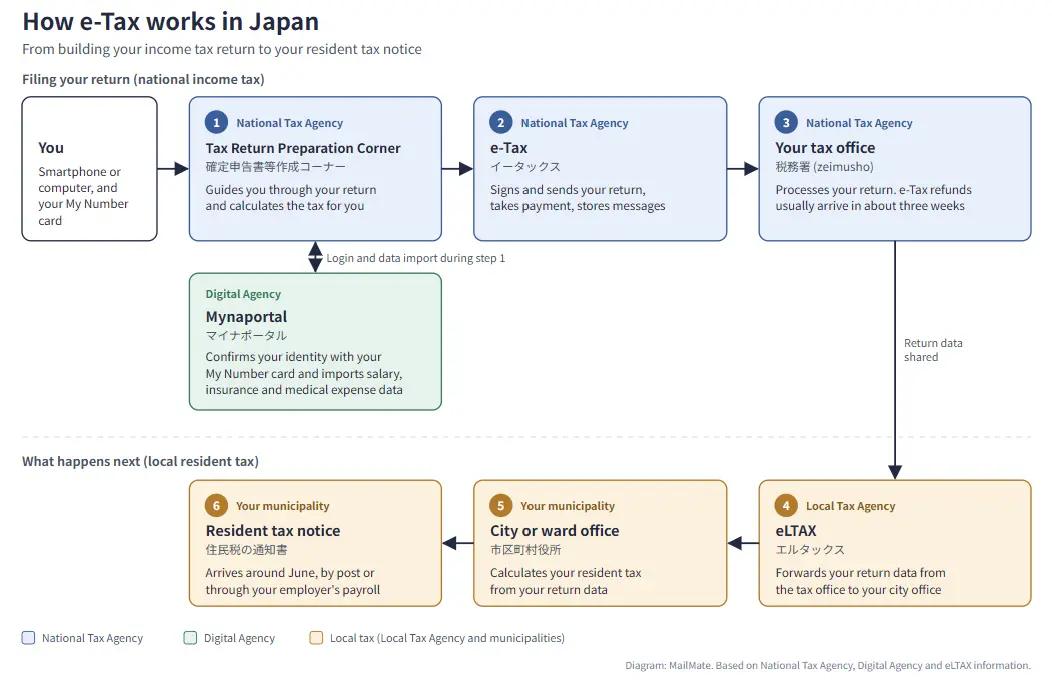
When you file your taxes online, you'll come across four different government systems, sometimes in a single session. It's easy to mix them up, especially when every screen is in Japanese. Knowing what each one does makes the whole process far less confusing.
| System | Japanese name | What it does | Who runs it |
|---|---|---|---|
| Tax Return Preparation Corner | Kakutei Shinkokusho-to Sakusei Kona (確定申告書等作成コーナー) | Builds your return with guided screens | National Tax Agency |
| E-Tax | イータックス | Sends your return, handles payment, stores messages | National Tax Agency |
| Mynaportal | マイナポータル | Logs you in with your My Number card and imports tax data | Digital Agency |
| eLTAX | エルタックス | Handles local taxes such as resident tax | Local Tax Agency |
In practice, you build your return in the Preparation Corner. You log in through Mynaportal. E-Tax then transmits the finished return to your tax office.
Do you need to file a tax return (kakutei shinkoku) in Japan?
Most full-time employees with one employer never file a return. Their company settles the year's tax through year-end adjustment, called nenmatsu chosei (年末調整).
However, you generally need to file, or will benefit from filing, if you:
- Work as a freelancer or run a sole proprietorship
- Earn salary from two or more employers
- Have side income over ¥200,000 on top of your salary
- Earn more than ¥20 million in salary
- Want to claim the medical expense deduction
- Made furusato nozei (ふるさと納税) donations to more than five municipalities
- Are claiming the housing loan deduction for the first year
- Left your job or Japan partway through the year
E-Tax is optional. You can still print your return and mail it, or hand it in at the tax office. Filing online has real advantages, though, from faster refunds to skipping the tax office queue. For the full filing process, see our guide on how to file a tax return in Japan.
Benefits and drawbacks of using E-Tax
E-Tax suits most residents with a working My Number card. However, the setup can be challenging, especially for non-Japanese readers.
Benefits
- No queues. You file from home, 24 hours a day outside maintenance windows.
- Faster refunds. The NTA processes E-Tax refunds in about three weeks, versus one to one and a half months for paper.
- A bigger blue return deduction. Sole proprietors filing a blue return (aoiro shinkoku, 青色申告) can deduct up to ¥650,000 by keeping double-entry books and filing through E-Tax, versus ¥550,000 on paper. The gap widens sharply from tax year 2027, as explained below.
- Auto-filled data. Mynaportal can import your withholding slip, insurance certificates, and medical expense records.
- Less paperwork. Many supporting documents don't need to be attached.
- Proof of filing. Tax offices stopped stamping paper return copies in january 2025. E-Tax gives you a dated receipt you can show a bank or immigration office.
Drawbacks
- Japanese screens. The system has no English interface.
- Password risk. Too many wrong entries lock your card. Resetting it takes an app and a kiosk visit, or a city office trip if you forget both passwords.
- Device setup. You need an NFC smartphone or a card reader.
- Fewer in-person options. Tax offices end weekend filing help starting with the 2027 season.
What changed in E-Tax in 2025 and 2026
E-Tax changed in four important ways over the past two years. Each one affects how you log in, where you get help, or how much you can deduct.
New users must log in with a My Number card
Until September 30, 2025, you could visit a tax office, show ID, and receive an e-Tax ID and password. That let you file online without a My Number card.
On October 1, 2025, the NTA stopped issuing these credentials. If you already have an ID and password, you can still use them for the 2027 filing season. The NTA plans to end the method from tax year 2027 returns, filed in early 2028. Everyone else needs a My Number card.
Your phone can now replace the physical card
In the past, you had to tap your My Number card on your phone every time you logged in. Now you can store the card's certificate on the phone itself.
Android users gained this option in January 2025. iPhone users gained it in September 2025, in time for the spring 2026 filing season. Once it's set up, you log in with Face ID or a fingerprint instead of your 4-digit PIN.
Weekend help at tax offices is ending
In past filing seasons, some tax offices opened on two Sundays to help people file in person. That weekend help ends starting with the 2027 season, which runs from February 16 to March 15, 2027.
If you need face-to-face help, plan a weekday visit. Otherwise, filing online at home is now the easiest option.
Blue return filers will need E-Tax for the full deduction
Japan's 2026 tax reform, passed in March 2026, ties the biggest blue return deductions to E-Tax. The new rules start with tax year 2027, so they first apply to returns filed in early 2028.
The blue return special deduction (aoiro shinkoku tokubetsu kojo, 青色申告特別控除) is an amount you subtract from your business income before tax is calculated. From tax year 2027, how much you can subtract depends on how you file:
- File with E-Tax and keep double-entry books: you can deduct up to ¥650,000 from your business income. That matches today's maximum, but filing on time through E-Tax becomes a requirement.
- File with E-Tax and use qualifying accounting software: you can deduct up to ¥750,000, a new top level. The software must keep a record of corrections and deletions, or link automatically to invoice data.
- File on paper: your deduction drops to ¥100,000, down from ¥550,000 today.
If you file a blue return on paper, switching to E-Tax before 2028 avoids losing up to ¥450,000 in deductions.
What you need before using E-Tax
Most e-Tax headaches, like a locked card or a forgotten password, surface on the day people sit down to file. A little preparation avoids them. Try to check the four items below a few weeks before the filing window opens on February 16.
1. A valid My Number card and its passwords
Foreign residents with a residence card and resident registration receive a 12-digit My Number. You then apply for the physical My Number card separately or get a combined residence and My Number card at immigration. To see how the new combined card works, read our guide to the My Number card and residence card merger.
The card holds two electronic certificates, each with its own password:
- User certificate PIN: 4 digits, used to log in. Three wrong tries locks it.
- Signature certificate password: 6 to 16 letters and numbers, used to sign your return. Five wrong tries locks it.
If you still know one password, you can reset the other with the JPKI password reset app and a convenience store kiosk. If you've forgotten both, visit your city or ward office. Test both passwords early.
2. A compatible smartphone or card reader
You can file entirely from a phone, as 4.97 million people did for tax year 2025. Your phone needs NFC and the official Mynaportal app.
- iPhone: Add your My Number card to your iPhone through the Mynaportal app. You can then log in with Face ID instead of tapping the card.
- Android: Supported models can store a smartphone electronic certificate for the same purpose.
- Computer: Use an IC card reader, or connect your phone as the reader.
3. Your E-Tax user ID
E-Tax assigns each user a 16-digit user identification number, called riyosha shikibetsu bango (利用者識別番号). New users can still get one.
This number differs from the retired ID and password login method. Keep it with your tax records.
4. Your tax documents and bank details
Gather these before you start:
- Withholding slip, called gensen choshuhyo (源泉徴収票), from each employer if you are employed
- Income and expense records for freelance or business work
- Deduction certificates for insurance, pension, and iDeCo
- Medical expense records and furusato nozei receipts
- Records of foreign income and foreign tax paid
- A Japanese bank account in your name for refunds
How to log in to E-Tax: My Number card vs. ID and password
Before you can file, E-Tax needs to confirm who you are. There are two ways to do this, and which one you can use depends on when you first signed up. If you're new to E-Tax, only the My Number card method is open to you.
| Method | Who can use it | What you need | Status for 2027 |
|---|---|---|---|
| My Number card method (マイナンバーカード方式) | Anyone with a My Number card | My Number card, both passwords, NFC phone or card reader | Standard method |
| ID and password method (ID・パスワード方式) | Only people issued credentials before Oct 1, 2025 | ID and password from a tax office visit | Closed to new users; ends from tax year 2027 returns |
The NTA always described the ID and password method as a temporary measure. It still works for the 2027 filing season. The NTA plans to retire it from tax year 2027 returns, filed in early 2028. If you still use it, switch to the My Number card method now.
How filing with e-Tax works
The process takes five main steps.
Step 1: open the Tax Return Preparation Corner
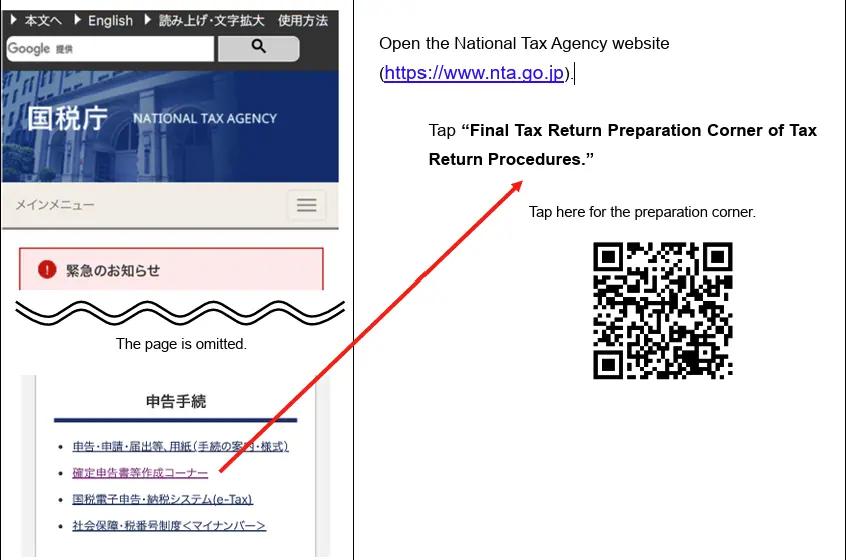
Image: NTA Japan
Go to the NTA website during filing season. Choose smartphone or computer, then select e-Tax as your submission method.
Step 2: log in with your My Number card
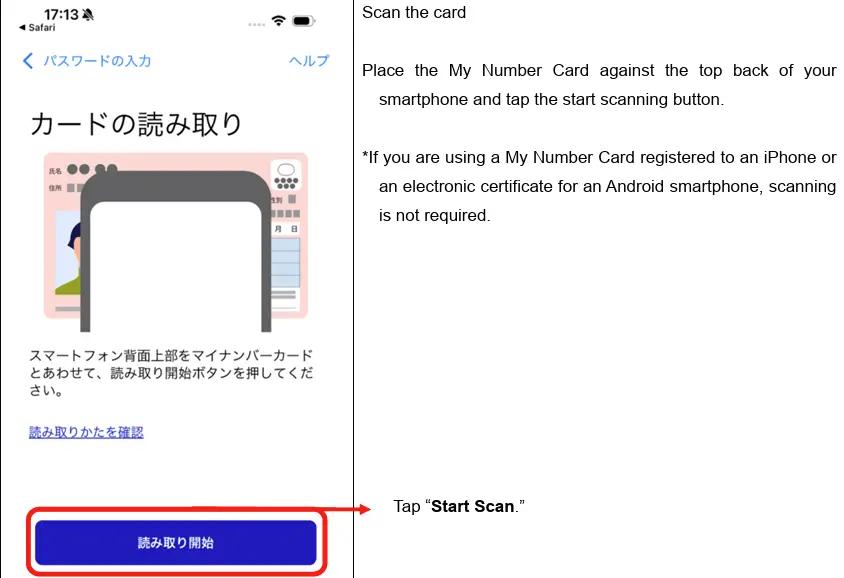
Image: NTA Japan
The site hands you over to Mynaportal. Tap your card or use your phone's stored certificate, then enter your 4-digit PIN.
Step 3: import data and enter income
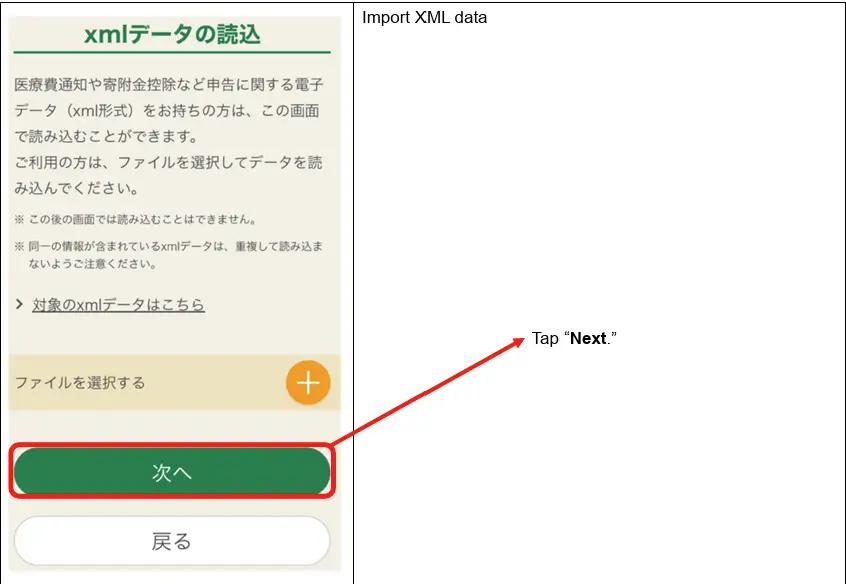
Image: NTA Japan
Mynaportal can pull in salary, pension, and deduction data automatically. Add any remaining income by hand.
Step 4: enter remaining deductions and check the result
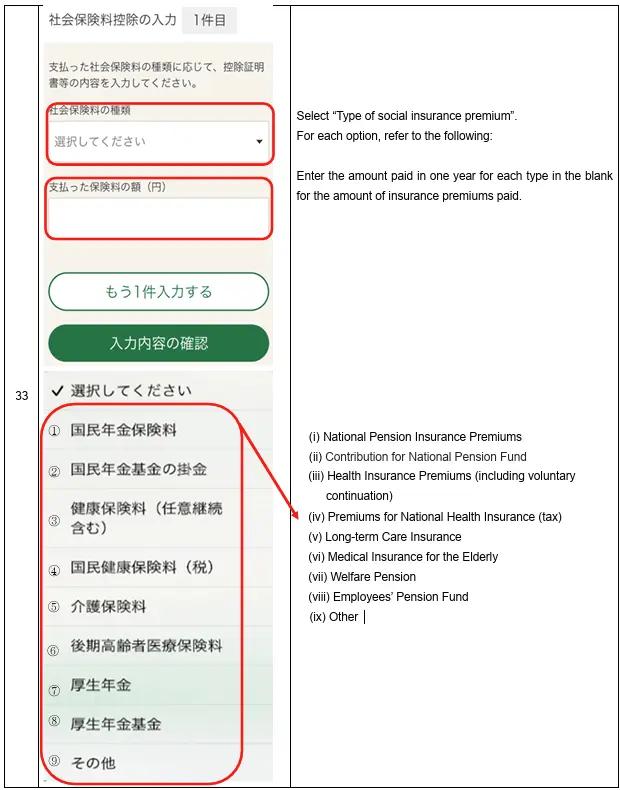
Image: NTA Japan
Add deductions such as medical expenses or dependents. The system calculates your tax or refund instantly.
Step 5: sign, send and settle
Sign with your signature password and send the return. Then pay what you owe, or wait for your refund.
Is E-Tax available in English?
No. The E-Tax and Preparation Corner screens appear only in Japanese.
You can still get English help from these sources:
- NTA input manual. "You can create a Final Tax Return at Home!" shows the screens with English notes. It also comes in Chinese, Vietnamese, Portuguese, and Nepali. Find it on the NTA foreigner manual page.
- NTA English website. The National Tax Agency English site explains income tax rules and deductions.
- English phone line. The Tokyo Regional Taxation Bureau answers English tax questions at 03-3821-9070 on weekdays, 9 a.m. to 5 p.m.
- Bilingual tax accountants. A zeirishi (税理士) can file for you through E-Tax.
Some users report that parts of E-Tax fail to load in an English-language browser. If screens break, switch your browser language to Japanese and try again.
E-Tax complications for foreign residents
Life events that barely affect Japanese citizens can block a foreigner's E-Tax access. Each issue below has a simple fix if you act early.
When your residence card or My Number card expires
If your visa has a fixed period of stay, your My Number card expires on the same date. After a visa renewal, you must update the card at your city office, unless you carry the new combined card.
Since June 14, 2026, immigration offices issued a Specified Residence Card (tokutei zairyu kado, 特定在留カード). It combines your residence card and My Number card into one card. It's optional, but it updates your My Number details automatically when you renew your visa at immigration. Our guide to the My Number card and residence card merger explains how to apply.
The electronic certificates on the card also expire after about five years. An expired certificate means you cannot log in or sign.
When you move house in Japan
An address change cancels the signature certificate on your My Number card. Without it, you cannot sign an E-Tax return.
Bring your My Number card when you file your moving-in notice, within 14 days of moving. The city office updates the address on your card. Ask them to reissue your signature certificate at the same visit, so you can sign e-Tax returns again.
When you leave Japan
Since May 27, 2024, Japanese nationals can keep using their My Number card abroad. Foreign nationals cannot. They must return the card when they file a moving-out notice.
That leaves two options for foreign residents:
- File before you leave. Submit your return and pay any tax before your departure date.
- Appoint a tax agent. Name a tax agent, called nozei kanrinin (納税管理人), to file and receive tax documents for you. Notify your tax office before you leave.
Skipping both can trigger penalties and late-payment interest. Learn more about how to appoint a tax representative in Japan.
When you own property or a company in Japan from abroad
Property owners who live overseas must name a local tax representative. That person or company receives property tax notices on your behalf.
Company owners face a different barrier. Corporate e-Tax needs the company representative's electronic certificate. Many foreign-owned companies have a zeirishi file for them instead.
Tax mail that still arrives on paper
E-Tax moves your return online, but it does not stop tax mail. Several important notices still go to your registered address in Japanese.
| Document | Japanese name | When it arrives | What to do |
|---|---|---|---|
| Resident tax payment notice | Juminzei nozei tsuchisho (住民税納税通知書). Employees get a similar notice through their employer. | Around June | Check the amount and pay by the slip deadlines |
| Prepaid tax notice | Yotei nozei gaku no tsuchi (予定納税額の通知) | Mid-June | Pay installments in July and November |
| Tax refund notice | Kokuzei kanpukin furikomi tsuchisho (国税還付金振込通知書) | After your refund | Confirm the amount matches your return |
| Tax office inquiry | Otazune (お尋ね) | Any time | Reply by the stated deadline |
| Filing reminder | Shinkoku no oshirase (申告のお知らせ) | January to February | Check your E-Tax Message Box too, since E-Tax users may get it there instead |
Check your e-Tax Message Box too, since e-Tax users may get it there instead
Since September 24, 2026, tax office letters carry a 13-digit inquiry number (otoiawase bango, お問い合わせ番号). Have it ready if you call about a notice. You can also opt in to receive some notices in your E-Tax Message Box instead of by post.
👉 Your resident tax comes from the same income data as your return. Our guide to residence tax in Japan explains how it works.
How MailMate helps foreign residents manage Japanese tax mail
Resident tax notices, refund notices and tax office letters all arrive on paper. They come in Japanese, often with firm deadlines.
MailMate gives you a Japanese address and a bilingual virtual mailbox. We log and photograph every letter that arrives.
Read every tax letter in English
Request a scan with one click. Our AI translates the letter and highlights key deadlines, amounts, and required actions.
Keep one address when you move
Your MailMate address stays the same when you change apartments. Tax and city office mail never gets lost between addresses.
Manage Japanese mail after you leave Japan
Read your mail in the online dashboard from any country. You can also forward originals worldwide and request payment of eligible bills.
Share mail with your tax accountant
Give your zeirishi access to the same scans you see. Business plans add role-based access for your whole team.
Services for property and company owners
- Property owners abroad: List MailMate with authorities as your tax representative and receive property tax notices.
- Company owners: Register your GK or KK at a MailMate business address in Tokyo, Kyoto or Fukuoka. Our virtual mailbox for business handles NTA and ward office mail.
MailMate does not file tax returns. We make sure you never miss the letter that tells you one is due.
How to spot a fake E-Tax email or SMS
As E-Tax has grown more popular, so have scams that copy it. Fake emails and text messages use E-Tax's name, logo and even its mascot. They usually claim you owe unpaid tax and threaten to seize your property unless you pay right away.
These scams work often enough to worry officials. On May 27, 2026, Japan's National Consumer Affairs Center issued a public warning. Some victims had already paid money or entered card details on fake sites.
Real E-Tax messages follow clear rules:
- One sender address. Genuine E-Tax mail comes only from info@e-tax.nta.go.jp.
- One subject line. The subject starts with "税務署からのお知らせ" (Notice from the Tax Office).
- No payment demands. The NTA never demands payment or threatens seizure by email or SMS.
- No SMS links. The NTA does not send text messages containing links.
- No links in the body. E-Tax emails generally contain no URLs at all.
If a message worries you, don't click anything. Log in to E-Tax directly and check your Message Box.
The NTA keeps an updated list of scam examples on its e-Tax phishing warning page.
Frequently asked questions about e-Tax in Japan
What is E-Tax in Japan?
E-Tax is the National Tax Agency's online system for filing tax returns and paying national taxes. Individuals mainly use it to file their annual income tax return. It also stores official messages from your tax office. In tax year 2025, 77.1% of income tax returns went through E-Tax.
Can foreigners use E-Tax?
Yes. Filing a tax return in Japan as a foreigner works much the same way as for Japanese residents. Any foreign resident with a residence card, resident registration and a My Number card can use e-Tax. The screens appear only in Japanese. The NTA publishes an English input manual to guide you through each step.
Can I use E-Tax without a My Number card?
Only if the tax office issued you an E-Tax ID and password before October 1, 2025. New users cannot get these credentials anymore, and existing ones stop working from tax year 2027 returns. Without a card, build your return in the Tax Return Preparation Corner. Then print it and submit it by post or at the tax office.
When is the 2027 tax filing deadline in Japan?
The filing window for tax year 2026 runs from February 16 to March 15, 2027. Any tax owed is also due by March 15. Refund-only returns can be filed from January 1, 2027. You have up to five years to claim a refund.
How long does an E-Tax refund take?
The NTA processes most e-Tax refunds in about three weeks. Paper returns usually take one to one and a half months. The refund goes straight to the Japanese bank account on your return. Our guide to tax refunds in Japan for foreigners covers what you can claim back.
Can I use E-Tax after I leave Japan?
It depends on your nationality. Japanese nationals can keep their My Number card abroad and file through E-Tax. Foreign nationals must return the card when they move out. They should file before leaving or appoint a tax agent to file for them.
Is this E-Tax email or text message real?
Check the sender first. Real E-Tax emails come only from info@e-tax.nta.go.jp. The NTA never demands payment or threatens seizure by email or SMS. When in doubt, log in to E-Tax directly instead of clicking any link.
In closing
E-Tax is now the standard way to file taxes in Japan. For foreign residents, it saves time but depends on a valid, up-to-date My Number card.
Before February 16, 2027, check three things. Confirm your card hasn't expired, test both passwords, and make sure your address is current. Those steps prevent most E-Tax problems.
E-Tax handles your return online, but Japanese tax mail keeps arriving on paper. MailMate makes sure you can read every letter, wherever you live.
일본 우편물 처리에 너무 많은 시간을 소비하고 있나요?
가상 우편함 + 번역 서비스는 월 3800원부터 시작합니다. 30일 환불 보장.