


Japanese Toilet Guide for Akiya Owners: Kumitori, Joukasou, and Costs Explained (2026)

Installing a Japanese toilet in an akiya starts with one question: what wastewater system do you have? Japan uses three systems: kumitori (汲み取り) pits, joukasou (浄化槽) tanks, and municipal sewage (下水道, gesuidou). Your system decides what Japanese toilet you can install, and what it will cost.
Most foreign buyers skip this check before buying. That mistake gets expensive fast. A kumitori property can need over ¥1,000,000 in conversion work before you even choose a toilet.
This guide covers each wastewater system in plain terms. It shows you how to identify your akiya's system, what conversion and upgrade costs, and how prefecture subsidies can cut that cost. Then it walks through choosing and installing the right toilet.
Key facts at a glance
| Topic | Key figure |
|---|---|
| Main toilet types in Japan | Squat (washiki), western flush, and multifunction washlet |
| Entry-level washlet seat (bidet seat only) | From around ¥30,000 |
| Integrated smart toilet | ¥500,000 and above |
| Joukaso installation: standard residential | ¥800,000 to ¥1,500,000 (subsidies of up to 50 to 60% available in many municipalities) |
| Joukasou annual maintenance | ¥30,000 to ¥60,000 per year (mandatory) |
| Municipal sewage connection piping work | ¥500,000 to ¥1,500,000 depending on distance |
| Penalty for failing to register a joukasou | Up to ¥500,000 fine or 3 months in prison. |
| Joukasou lifespan | Approximately 20 to 30 years |
What is a Japanese toilet?
The three types of toilet in Japan
The term "Japanese toilet" covers a wide range of products, but what most people picture, and what most akiya buyers want, is commonly called a washlet (ウォシュレット). This is a registered brand name of TOTO, one of Japan's leading bathroom manufacturers, though the word has become a generic term for all electronic bidet toilet seats in the way "hoover" describes any vacuum cleaner.
Japan has three main types of toilets in everyday use: the traditional squat toilet (washiki, 和式), the standard western flush toilet; and the multifunction washlet.
By 2018, washlets were in 80.2% of Japanese households. This figure comes from Japan's Cabinet Office consumer survey. The rate has held steady since then, rather than climbing further.
Washlet seats: features and price range
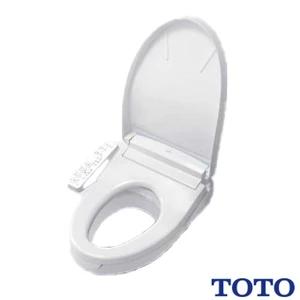
A washlet is a toilet seat with a built-in electronic bidet. It fits onto an existing western toilet bowl. Entry-level models start around ¥30,000, with a heated seat and warm water spray. Mid-range and higher-end models add features like a motion-sensor lid, a sound simulator for privacy, and a warm air dryer.
Integrated smart toilets
Integrated smart toilets combine the washlet seat and the bowl into one unit. TOTO calls its version NEOREST, with equivalents from Panasonic and INAX. Prices start around ¥150,000 and exceed ¥500,000 for flagship models. These need a dedicated installation, and most akiya renovations are better served by a separate washlet seat and toilet bowl instead.
Why your wastewater system determines everything
What a washlet needs to work in your property
A washlet seat can, in theory, be fitted to almost any standard western toilet bowl. The seat itself requires two things: a water connection (to supply the warm water spray) and a nearby electrical outlet, typically a dedicated 100V socket within reach of the seat. In most cases, that installation is straightforward.
The problem with older Japanese properties
The more fundamental question, one that comes before choosing any toilet model, is whether your akiya property even has a working flush toilet to begin with and whether the plumbing can support one.
In Japan's cities and newer suburbs, this is rarely an issue. In rural areas and older properties, including the kind of akiya purchased through akiya banks and municipal programs, the situation is far more varied.
Many older Japanese properties, particularly those built before the 1970s in areas without early access to public sewage infrastructure, were built with a kumitori system. Some were later upgraded to a joukasou or have since been connected to municipal sewage. However, many rural properties still operate on kumitori to this day.
Japan's three wastewater systems explained
Wastewater systems compared at a glance
| System | Supports a flush toilet? | Connection deadline if sewage arrives | Ongoing legal duties |
|---|---|---|---|
| Kumitori (汲み取り) | No, must convert first | 3 years (national rule, Sewerage Act Art. 11-3) | None while in use, but must convert |
| Joukasou (浄化槽) | Yes | Set by municipality, varies by city | 3 legal duties, several visits/year, ¥30,000-¥60,000/year |
| Municipal sewage (下水道) | Yes | Not applicable | None beyond normal plumbing upkeep |
Kumitori (汲み取り): the pit collection system
Kumitori is Japan's oldest residential toilet system and the one most likely to surprise akiya buyers. The word combines two verbs: kumu (to dip) and toru (to take out). It is, in plain English, a non-flushing pit toilet.
A kumitori toilet has a porcelain bowl, sometimes a traditional squat toilet (washiki, 和式) and sometimes a western-style seat, but no running water connection and no flush mechanism.
Waste falls directly into a sealed underground pit beneath or adjacent to the property.
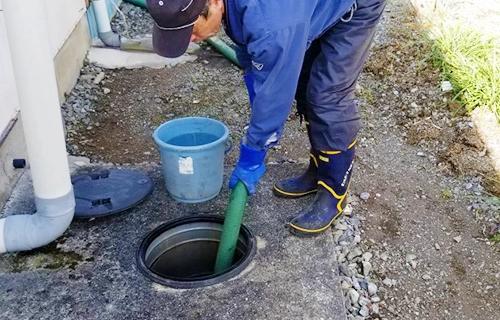
Periodically, typically once every 2 to 3 months in areas where the system is still active, a licensed collection vehicle visits the property to vacuum the accumulated contents from the pit and transport them to a treatment facility.
Kumitori toilets do not smell as bad as you might expect, because most systems include a ventilation fan connected to the pit that continuously draws odor outside rather than back into the bathroom. However, they cannot be upgraded to a standard flushing western toilet, let alone a washlet, without a full wastewater system conversion.
Can you install a Japanese toilet on a kumitori system?
No. You must first convert to either a joukasou or municipal sewage before any flush toilet can be installed.
How much does it cost to upgrade a kumitori system?
If municipal sewage is not available in your area, the standard path is joukasou installation. This typically costs ¥800,000 to ¥1,500,000 before subsidies. Municipal subsidies of up to 50–60% of installation costs are available in many rural municipalities actively trying to attract new residents. After conversion, a standard western toilet and washlet seat can then be fitted.
Joukasou (浄化槽): the on-site purification tank
A joukasou is an underground tank, usually installed in the garden or yard, that treats household wastewater on-site using biological microorganisms before discharging the treated water into a nearby drainage ditch or waterway.
Unlike kumitori, a joukasou supports a full flushing toilet system with running water, which means a standard western toilet and washlet can be installed in the bathroom above it.
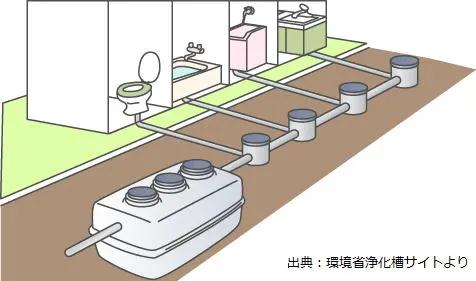
There are two types of joukasou that foreign buyers commonly encounter in older properties:
- Tan-doku (単独) joukasou, also called a minarashi joukasou (みなし浄化槽), treats toilet waste only. Kitchen wastewater, bath water, and laundry water bypass the tank and discharge untreated. These older single-treatment tanks are no longer permitted for new installation. The Joukasou Act (浄化槽法, Joukasouhou) banned them. Many still remain in older properties today.
- Gappei (合併) joukasou treats all household wastewater together: toilet, kitchen, bath, and laundry. This is the current standard, and most municipalities require conversion from tan-doku to gappei when renovation work is undertaken. If your akiya has a tan-doku tank, budget for replacement as part of your renovation.
Can you install a Japanese toilet on a joukasou system?
Yes. If the joukasou is a functioning gappei unit in reasonable condition, you can install a flushing western toilet and washlet above it. If it is a tan-doku unit, aged, or showing signs of failure (foul odour from drains, slow drainage, water pooling near the tank), you will likely need to replace or upgrade the tank before or alongside your toilet renovation.
What does a joukasou replacement cost?
A standard residential gappei joukasou for a five-person household typically costs ¥800,000 to ¥1,500,000 installed, according to Akiya Japan's real cost guide (2025). The lifespan of a joukasou is approximately 20 to 30 years, so properties built before the 1990s with original tanks are likely overdue for replacement. Subsidies are widely available and can reduce owner costs significantly.
What are the legal obligations for joukasou owners?
Under the Joukasou Act (浄化槽法), joukasou owners in Japan have three mandatory legal obligations:
- Regular maintenance inspections (保守点検, hoshuu tenken): Must be conducted by a contractor registered with the prefectural governor, typically three to four times per year for residential tanks. The contractor checks water quality, tank function, and mechanical components.
- Annual cleaning (清掃, seisou): Must be conducted by a contractor licensed by the municipal mayor. The tank must be pumped and cleaned at least once per year.
- Annual legal inspection (法定検査, houtei kensa): Must be conducted by a designated inspection body appointed by the prefectural governor. This is independent of the maintenance inspection and cannot be substituted for it — its purpose is to verify that both maintenance and cleaning have been carried out correctly.
Each of the three services requires a differently licensed or designated provider: maintenance contractors are registered at prefectural level, cleaning contractors are permitted at municipal level, and the legal inspection must be carried out by an independently designated body.
In practice, some prefectures and municipalities actively encourage owners to arrange all three through a single bundled contract with a management company that coordinates the separate providers on your behalf. Whether bundled or arranged separately, all three must be completed each year.
Failing to register a new joukasou, or filing a false registration, is a legal violation. The Joukasou Act (浄化槽法) sets the penalty at up to three months in prison. It also allows a fine of up to ¥500,000 as an alternative.
Enforcement varies by municipality. The registration duty itself applies everywhere in Japan.
Annual joukasou maintenance costs total approximately ¥30,000–¥60,000 per year when all three requirements are combined.
Municipal sewage (下水道, gesuidō): the city connection
Municipal sewage is the system most people are familiar with from other countries: a network of underground pipes managed by the local government that carries household wastewater to a centralized treatment plant.
In Japan's cities and larger towns, the majority of properties are connected to gesuidō. In rural areas, coverage is lower and expanding gradually.
If your akiya is connected to municipal sewage, your wastewater situation is the simplest of the three. A flushing western toilet and washlet can be installed directly, subject to plumbing layout in the bathroom. No on-site treatment tank is required, and there are no ongoing inspection obligations beyond normal household plumbing maintenance.
If municipal sewage reaches your area, your deadline to connect depends on your current system.
- Kumitori properties get three years. This comes from Article 11-3 of the Sewerage Act, and it applies nationwide.
- Joukasou properties often get less time. Each municipality sets its own deadline. Some allow only one year.
Always confirm your exact deadline with the local sewerage office. Don't assume the three-year window applies to your joukasou.
The connection itself involves piping from the property to the municipal main, which can cost ¥500,000–¥1,500,000 depending on the distance and the condition of existing plumbing.
Can you install a Japanese toilet on a municipal sewage system?
Yes. If your property is connected to gesuidō and already has a western toilet, upgrading to a washlet seat is a straightforward afternoon job for most plumbers and many DIY-confident owners. If your property is connected to municipal sewage but still has a kumitori or squat toilet, you will need new plumbing within the bathroom but no external infrastructure work.
How to identify your property's wastewater system
Identifying which system an akiya uses before you buy is not difficult if you know what to look for and what documents to request.
Check the juuyou jikouhou (重要事項説明書)
The juuyou jikouhou or Important Matters Document, is the property disclosure document that a licensed real estate agent in Japan is legally required to provide to a buyer before the sale is concluded. It is typically a multi-page Japanese document covering legal status, land zoning, building restrictions, and infrastructure connections.
Look specifically for the section on sewage and drainage (排水, haisui). It will state whether the property is connected to municipal sewage (公共下水道, koukyou gesuidō), a joukasou (浄化槽), or kumitori (汲み取り).
Ask your estate agent directly
Japanese real estate agents are legally obligated to disclose the type of wastewater system at the time of the important matters explanation. Ask directly and in writing, "What wastewater system does this property use? Is there an inspection certificate for the joukasou?" If the agent cannot confirm, that is a warning sign.
Look for a joukasou lid in the garden
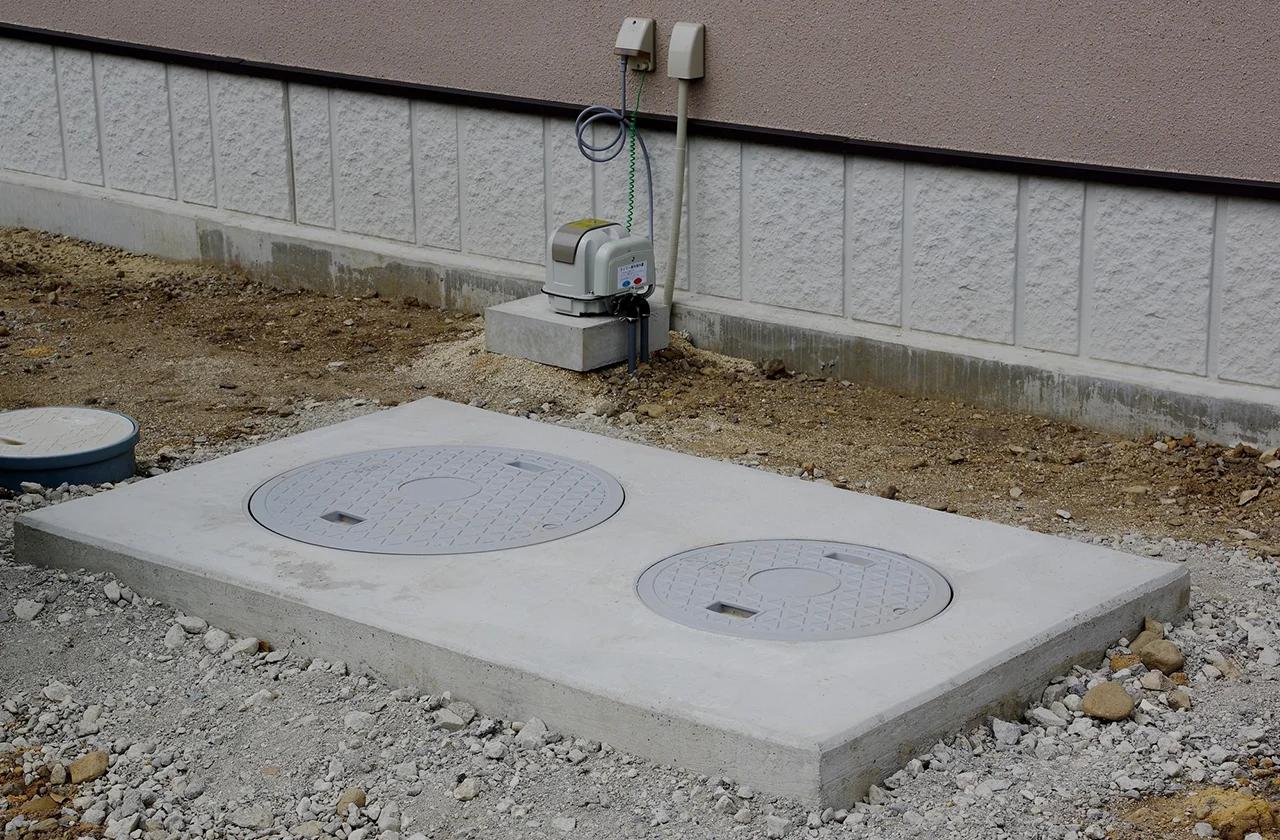
If the property has a joukasou, there will be one or more concrete or plastic lids set into the ground in the garden or yard area, typically close to the house. These lids are usually circular, around 50–60cm in diameter, and sometimes have ventilation pipes extending from them. If you can visit the property before buying, checking for these lids is a basic and useful site inspection step.
Check with the municipal office
Your local municipal office maintains records of registered wastewater systems. If the joukasou is registered, the records will confirm its installation date, tank capacity, and most recent inspection results.
If no joukasou is registered and the property is not connected to municipal sewage, it is almost certainly on kumitori.
Commission a professional inspection
For any serious akiya purchase, commissioning a full home inspection by a licensed home inspector is advisable. Inspectors will assess plumbing and drainage, including the condition of any joukasou, as part of a standard inspection.
Upgrade costs and what triggers mandatory conversion
Understanding what your wastewater upgrade will cost requires knowing your starting point. Here is a practical cost summary for the most common scenarios an akiya buyer faces:
| Starting situation | Required work | Estimated cost |
|---|---|---|
| Kumitori, no municipal sewage available | New joukasou installation + new toilet + washlet seat | ¥1,000,000 to ¥2,000,000+ (before subsidies) |
| Kumitori, municipal sewage nearby | Sewage connection piping + new toilet + washlet seat | ¥600,000 to ¥2,000,000 depending on distance |
| Old tan-doku joukasou (toilet only) | Replace with gappei joukasou + new toilet + washlet seat | ¥900,000 to ¥1,700,000 (before subsidies) |
| Functioning gappei joukasou | New western toilet + washlet seat | ¥100,000 to ¥400,000 depending on bathroom condition |
| Municipal sewage connected, western toilet already installed | Washlet seat only | ¥30,000 to ¥200,000 |
| Municipal sewage connected, no western toilet | New toilet bowl + washlet seat + minor plumbing | ¥150,000 to ¥500,000 |
Prefecture subsidies
Many municipalities offer subsidies for joukasou installation. Rural areas trying to attract new residents offer the largest programs.
Typical subsidy terms look like this:
- Coverage: 50-60% of installation cost, in many qualifying areas.
- Cap: Up to ¥900,000 in some programs, per Japanese contractor guidance sites (2025).
- Conditions: Many programs require you to live in the property for a set number of years.
- Timing: Subsidy budgets often run out partway through the fiscal year, so apply early.
Subsidy rules change every year, and every municipality sets its own terms. Some akiya-focused programs bundle a joukasou subsidy with a renovation subsidy. Contact your target municipality's office before you budget, and ask specifically about both programs together.
Do not assume a subsidy will apply. Confirm the current terms in writing before you rely on the number in your budget.
👉 Read also: Will Japan Pay You To Move There?
What triggers mandatory conversion
Two situations trigger a legal obligation to convert your wastewater system regardless of your preference:
Municipal sewage becomes available. Kumitori properties get three years to connect, under the national Sewerage Act. Joukasou properties follow a separate, municipality-set deadline, which can be shorter. Check with your local sewerage office to confirm your exact window.
Significant renovation work. In many municipalities, undertaking substantial renovation work on a property with a non-compliant tan-doku joukasou triggers a requirement to upgrade to a gappei unit.
Since April 2025, building permits are now required for structural work on two-story wooden buildings, and the permit process typically surfaces non-compliant wastewater systems.
Choosing and installing your Japanese toilet
Once your wastewater situation is understood and any necessary infrastructure work is completed or planned, choosing your toilet and washlet becomes much more straightforward.
Washlet seat or integrated unit?
For most akiya renovations, a washlet seat fitted to a new western-style toilet bowl works best. This two-part approach lets you pick a toilet bowl for your space, separately from the washlet features you want.
Mid-range washlet seats, priced ¥60,000 to ¥120,000, suit most households and add the features covered earlier in this guide.
Choose an integrated smart toilet only for a full bathroom renovation, where you want a seamless, single-unit look. These need a dedicated installation and don't suit DIY.
Electrical requirements
Every washlet requires a standard 100V electrical outlet within reach of the toilet.
In older Japanese bathrooms, this outlet is frequently absent, particularly in powder room-style toilet rooms that were designed purely for a non-electric toilet. Adding a dedicated outlet requires an electrician and should be budgeted into your installation cost.
In some older buildings, the electrical panel may also need upgrading to support the additional load. Do not attempt to run a washlet from an extension cord: it is a safety risk and will void the warranty.
Water pressure considerations in rural areas
Washlets require adequate water pressure to function correctly. In urban areas connected to municipal water supply, this is rarely an issue.
In rural akiya properties using well water or older municipal connections in remote areas, water pressure can be lower than the washlet's minimum requirement.
Check the water pressure specification on any model you are considering and, if necessary, have a plumber assess your supply pressure before purchasing. Some models include built-in pressure compensation; others do not.
Flushing water and toilet paper
Japanese flush toilets are designed to handle toilet paper.
In fact, Japanese toilet paper is specifically manufactured to dissolve rapidly in flushing water. However, do not flush paper towels, wet wipes, or any non-toilet paper product: these do not dissolve and will damage your joukasou or block your plumbing.
Can you install a washlet yourself?
Fitting a washlet seat to an existing western toilet is within the capability of a confident DIY owner.
The process involves removing the old seat, fitting the mounting bracket, connecting the water supply hose to the toilet's inlet valve, and plugging the unit into the electrical outlet. Most models include clear installation guides.
However, be aware that the installation manual, the warranty registration card, and the product support documents all arrive in Japanese.
For full toilet replacement, new bowl, new plumbing connections, and a washlet seat, use a licensed plumber. For joukasou installation or replacement, you must use a licensed joukasou contractor.
👉 Read also: Japanese House Construction: Are Akiya Renovations Worth It?
Managing your Japanese property from abroad
Managing an akiya from overseas adds its own challenges, especially when contractor quotes and subsidy paperwork arrive in Japanese. MailMate handles mail, tax bills, and utility setup for property owners living abroad. See MailMate's property management services for the full list of what's included.
For a real-world example of how this works in practice, read Javier Batista Santiago's story: from YouTube inspiration to owning a home in Japan.
Frequently asked questions
What is a kumitori toilet and can it be replaced with a flushing toilet?
A kumitori (汲み取り) toilet is a non-flushing pit collection system common in older rural Japanese properties. Waste is collected periodically by a licensed vacuum truck rather than flushed away with water. You cannot install a standard western flush toilet or washlet on a kumitori system without first converting to either a joukasou on-site purification tank or connecting to municipal sewage (下水道, gesuidou). Conversion costs typically range from ¥800,000 to ¥1,500,000 for joukasou installation before any applicable municipal subsidies.
How much does it cost to install a Japanese toilet in an akiya?
The total cost depends on your starting wastewater situation. If your akiya already has a functioning gappei joukasou, or is connected to municipal sewage with a western toilet in place, fitting a mid-range washlet seat costs ¥60,000 to ¥120,000 plus installation. If you need to replace the toilet bowl too, budget ¥100,000 to ¥400,000 in total. If you need to install a new joukasou, costs rise to ¥1,000,000 to ¥2,000,000 or more before subsidies. Municipal grants covering 50 to 60% of joukasou installation are available in many rural areas.
What is a joukasou and do I need to maintain it?
A joukasou (浄化槽) is an underground tank. It treats household sewage on-site using microorganisms before releasing the treated water. Under Japan's Joukasou Act (浄化槽法), owners must arrange three annual services: maintenance inspections, cleaning, and an independent legal inspection. Combined annual costs run about ¥30,000 to ¥60,000. Failing to register a joukasou can bring a fine up to ¥500,000, or up to three months in prison.
Can I install a washlet seat without connecting to sewage?
Yes, if your property already has a working flush toilet connected to a joukasou. A washlet seat is fitted to the existing toilet bowl and requires a water inlet connection and a 100V electrical outlet. The wastewater from the washlet spray goes into the same drain as the toilet, which is handled by the joukasou as normal. You cannot install a washlet on a kumitori system because kumitori has no flush mechanism and no water supply to the toilet.
What documents show the wastewater system type when buying a house in Japan?
The primary document is the juuyou jikouhou (重要事項説明書), the property disclosure statement that your estate agent is legally required to provide before purchase. It includes a section on sewage and drainage that states whether the property uses municipal sewage, joukasou, or kumitori. For joukasou properties, ask specifically for the most recent houkoku sho (報告書), the annual legal inspection report, which shows the tank's condition and compliance status. Your local municipal office can also confirm the registered wastewater system for any property address.
Do all prefectures in Japan offer wastewater subsidies?
No. Subsidy programs are set by individual municipalities, not by prefectures as a whole. Some rural towns offer generous joukasou grants to attract new residents. Others offer nothing at all. Always check with your target municipality's office directly, since neighboring towns can have very different programs.
How do I find out if my akiya qualifies for a subsidy?
Contact the environmental or waterworks division of your municipal office directly. Ask specifically about joukasou installation subsidies and any renovation subsidy that can combine with it. Bring your property address and, if you have it, your current wastewater system type. Get any quoted subsidy amount confirmed in writing before you budget around it.
Do Japanese public toilets work the same way as home toilets?
Public toilets in Japan vary widely. Many public restrooms, convenience stores, and train stations now feature washlets with the same bidet functions, heated seats, and sound princess features found in private homes. Older public areas, parks, and some rural train stations still have traditional squat toilets. Unlike many other countries, public toilets in Japan are almost universally free to use and are maintained to a high standard of cleanliness. In public restrooms with multiple cubicles, you will typically find both western-style and squat-style options.
Does a washlet use a lot of water or electricity?
Washlets use a small amount of water for the bidet spray, typically under one litre per use, which is considerably less water than producing and disposing of toilet paper. Because Japanese bidets replace much of the need for toilet paper, they also contribute to reducing paper consumption, which has measurable benefits for forests and the environment. TOTO's premium models use about 4.8 liters per flush, which is efficient by international standards. Electricity consumption is low for the heated seat and dryer functions, though models with a continuously heated seat will add a modest amount to your electricity bill compared to models that heat the seat only when occupied.
What should I know about toilet etiquette in Japan?
In many Japanese homes and traditional establishments, dedicated toilet slippers are provided near the bathroom entrance. These are worn inside the toilet room and should not be taken into other areas of the house, as they help keep the toilet space and living areas hygienically separate. In public restrooms across Japan, be aware that some older facilities, particularly in rural areas, may not have soap or paper towels available for handwashing, so carrying a small hand towel or pocket tissues is a practical habit. Toilet paper is generally acceptable to flush in urban areas connected to municipal sewage, but in properties with a joukasou, use only Japanese toilet paper, which is manufactured to dissolve rapidly and is safe for on-site treatment systems.
In closing
Understanding Japan's wastewater infrastructure is not the most glamorous part of buying an akiya, but it is one of the most financially significant. Discovering that your ¥2,000,000 countryside house requires a ¥1,500,000 joukasou installation before you can install a western toilet is a surprise best avoided. The information exists in the property disclosure document, and the right questions asked before signing will save you from expensive surprises after.
Once your wastewater situation is confirmed and any necessary infrastructure work is planned, fitting a washlet is genuinely one of the most worthwhile upgrades you can make to an older Japanese property.
Modern Japanese toilets are comfortable, hygienic, efficient with clean water, and thoroughly representative of the innovation that makes living in Japan distinctive.
花太多時間處理日本郵件?
虛擬郵箱 + 翻譯服務每月僅需 3800 元起。30 天退款保證。