


Japan’s Housing Depreciation: Understanding the Unique Real Estate Market

In Japan, residential buildings lose most or all of their value within 20 to 30 years of construction. This is the main reason cheap houses and even free houses exist across rural Japan—the land retains value but the building itself is considered worthless once it passes its statutory useful life. This is the opposite of most Western real estate markets, where homes appreciate over time.
The cause is a combination of wooden construction methods, cultural preferences for new buildings, and government-mandated statutory useful life periods of 22 years for wooden structures and 47 years for reinforced concrete buildings.
For property owners and investors, this depreciation has a direct and significant impact on tax obligations. Under Japan's 減価償却 (genka shoukyaku) system, building costs are deducted as expenses over the statutory useful life of the structure, reducing taxable rental income each year without requiring additional cash outlay.
This article explains how Japan's housing depreciation system works, how to calculate your annual depreciation expense, and how it affects your tax position as a foreign property owner.
Houses in Japan depreciate rapidly
Japan’s housing market is different from many Western countries where real estate value appreciates over time. In Japan, houses tend to depreciate in value quickly and sometimes become worthless within decades.
The average lifespan of houses in Japan is approximately 30 years, although it depends on the material that was used to build a house.
However, the key characteristic of the Japanese real estate market is that land prices tend to retain or even increase in value, while the purchase price of a brand-new house declines quickly.
This is particularly true in desirable locations with a high demand, such as central Tokyo or other urban areas. In rural Japan, however, land may hold little value, making the Akiya abandoned home problem serious.
Factors contributing to housing depreciation in Japan
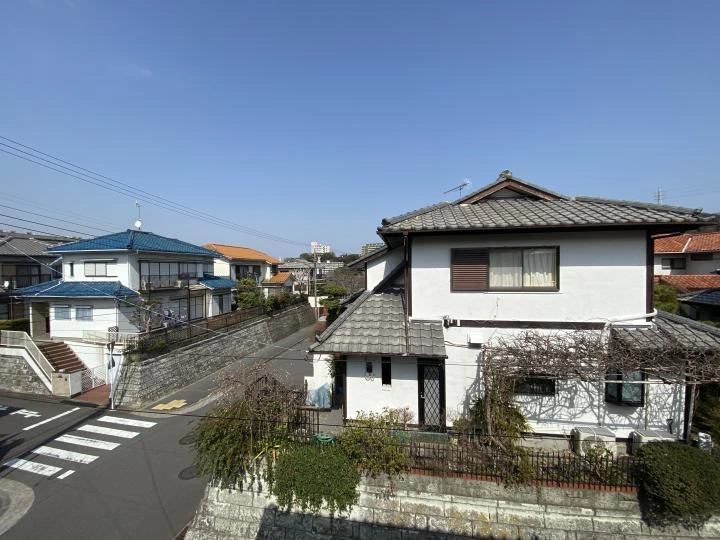
The reasons why Japanese houses depreciate so quickly are due to cultural, economic, and legal factors as well as policies set by the Japanese government.
1. Construction & building materials
Many homes in Japan are made of wooden structures, which get damaged easily from natural disasters such as earthquakes and typhoons. In recent years, reinforced concrete has been used for modern homes, but the most common building material in Japanese homes remains wood.
2. Cultural and economic views on homes in Japan
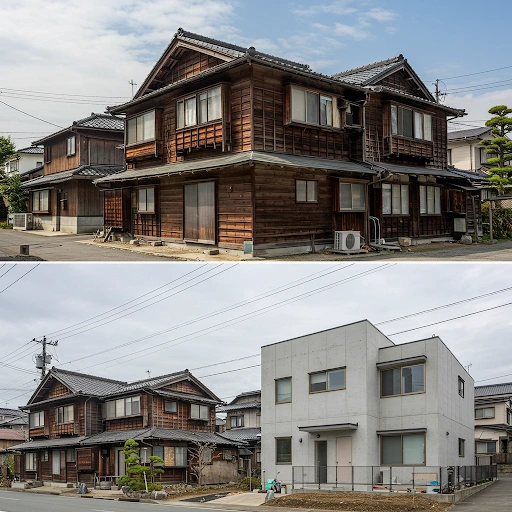
Japanese people tend to view homes as temporary structures, in contrast to the Western concept of homeownership. In modern-day culture, Japanese people prefer everything new rather than used, and this view goes the same with housing.
Older buildings are considered to be unsuitable for modern living, and many residential buildings are torn down after 30 years. People generally keep the land and build new houses with modern designs and updated earthquake resistance standards.
3. Legal and tax implications
The Japanese government dictates statutory useful life regulations, stating that the depreciation period of wooden houses is 22 years, and reinforced concrete buildings are 47 years.
The national tax agency determined these standards for tax purposes, which resulted in the trend of demolishing older homes to build new buildings. These laws make it difficult for property owners to keep high resale value on used houses.
General impact on property owners and investors
Here are some impacts on property owners and investors.
For property owners
Owning an old house in Japan can be burdensome financially, as maintaining it does not guarantee a resale value (unlike real estate investments in other countries).
For foreign and domestic investors
Despite the rapid depreciation of homes, foreign investors have been increasingly entering the Japanese real estate market, especially in desirable areas like central Tokyo. The urban areas do have a lot of investment opportunities, and the land values usually increase over time.
However, foreign investors need to be cautious about real estate investment as there are countless factors involved in the housing market in Japan. It is highly recommended to reach out for professional help to navigate the market.
👉Read also: English-Speaking Real Estate Companies in Japan for Renting and Buying a Property
Tax-related impact for investment properties in Japan
Housing depreciation has a huge impact on those who own a property that generates income.
There is a system of accounting called 減価償却 genka shoukyaku, which is an accounting process of allocating the cost of a tangible asset over its useful life.
What is 減価償却 genka shoukyaku?
Depreciation (genka shoukyaku) is an accounting process in which the purchase cost of a fixed asset is recorded as an expense in installments over the period of its usable life.
Assets whose value decreases over time, such as building, equipment, machinery, and fixtures, are called “depreciable assets.” Since depreciable assets generally deteriorate over time, the depreciation process recognizes its gradual deterioration as an expense and reduces its book value.
Building is a depreciable asset, but land is not
Building is a depreciable asset, but land cannot be depreciated because its value does not decrease over time.
For buildings, there is “useful life” of the property set by the government. The useful life depends on the structure of the property.
Structure |
Useful life |
|---|---|
|
Steel reinforced concrete (SRC) Reinforced concrete (RC) |
47 years |
Steel |
34 years |
Light gauge steel |
19 years |
Wood |
22 years |
How to calculate housing depreciation in Japan
Japan uses two primary depreciation methods for real estate: the straight-line method (定額法 teigaku-ho) and the declining balance method (定率法 ていりつほう). For buildings acquired after 2007, the straight-line method is mandatory.
Straight-line depreciation formula:
Annual Depreciation Expense = Acquisition Cost x Depreciation Rate
Depreciation rates by structure type (straight-line method):
Structure |
Useful Life |
Annual Depreciation Rate |
Reinforced Concrete (RC/SRC) |
47 years |
0.022 |
Steel |
34 years |
0.030 |
Light Gauge Steel |
19 years |
0.053 |
Wood |
22 years |
0.046 |
Example:
A wooden rental property purchased for ¥20,000,000 (building value only, excluding land):
Annual depreciation = ¥20,000,000 x 0.046 = ¥920,000 per year
This ¥920,000 is deducted from your rental income each year for 22 years, directly reducing your taxable income without any cash outlay. For an investor in the 33% tax bracket, this represents an annual tax saving of approximately ¥303,600.
For used buildings, the useful life is recalculated using the following formula:
Remaining Useful Life = (Statutory Useful Life x 0.2) + Years Beyond Statutory Life x 0.2
This shorter remaining life means used buildings generate larger annual depreciation deductions, which is why used wooden buildings are particularly attractive to high-income investors in Japan.
Source: National Tax Agency Japan (国税庁)—No. 2100
Why is depreciation important for investors?
Depreciation (genka shoukyaku) is crucial for real estate investors because it greatly impacts tax savings and overall investment returns.
1. Tax deduction benefits
Depreciation expenses have a tax-saving effect because income is calculated by subtracting depreciation expenses from income from real estate such as apartments and condominiums, thereby reducing taxable income.
The expenses for real estate income, such as fixed asset tax, insurance premium, and repair costs, are the expenses you have to actually pay in that period. However, depreciation expenses can be deducted without actual expenditure. Used buildings with short useful lives have a large amount of depreciation expenses, so they have a higher tax-saving effect.
2. Tax benefits when selling property
Used properties depreciate faster than new ones, and this allows for larger deductions in a shorter period of time. In the long run, this can be beneficial for tax savings.
For example, if both the used building and the new building are purchased at ¥40 million and sold for ¥35 million after 20 years:
Used building: Depreciates completely in 20 years, recording ¥40 million in expenses but facing a ¥35 million taxable capital gain upon sale
New building: Depreciates only ¥16 million over 20 years, leading to a lower depreciation deduction but a smaller taxable gain of ¥11 million upon sale
Since business and rental income are subject to progressive tax rates, while capital gains tax is fixed at 15% for properties held over five years, shorter depreciation periods tend to result in overall larger tax savings.
👉Read also: Real Estate Tax in Japan: An Easy, Quickstart Guide
Note: For property owners not living in Japan, MailMate provides a tax representative service, allowing you to take care of the acquisition tax without needing to be physically present at your property in Japan.
Future of Japan’s housing market
The depreciation trend might change in the future.
New trends in housing
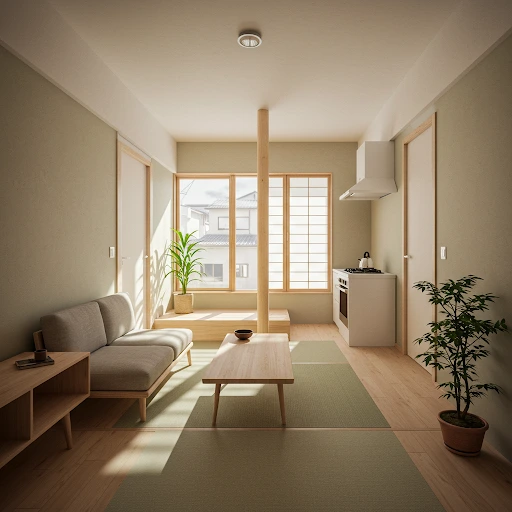
Because of the current situation with the Japanese economy, Japanese people have started to show some changes in housing trends. Especially among young people, the demand for small rooms and compact living spaces is growing, and due to sustainability movements, environmentally friendly construction materials may influence Japanese buildings in the future.
Government and market reforms
A Tokyo architectural historian claims that Japanese policies need to shift to encourage renovations rather than demolition. If policies change, the Japanese housing market trend might become the same way as Western countries.
Frequently asked questions
Do Japanese houses depreciate in value?
Yes. Japanese houses depreciate rapidly, with most residential buildings losing all structural value within 22 to 47 years, depending on construction material. This is one of the key differences between the Japanese real estate market and many Western countries, where homes typically appreciate over time. In Japan, the building is treated as a depreciating asset, while the land beneath it retains or increases in value independently. This dynamic is why cheap houses and even free houses exist across rural Japan, where land prices are low and the building itself has reached the end of its statutory useful life.
Why do Japanese houses depreciate so quickly compared to Western countries?
Three factors drive rapid depreciation in Japan that do not apply in the same way in many Western countries: wooden construction methods, cultural attitudes toward older properties, and government tax regulations. Wood is the most common building material in Japanese homes, and wooden structures are assigned a statutory useful life of just 22 years by the National Tax Agency (国税庁). Japanese people have traditionally viewed homes as temporary structures rather than long-term assets, a contrast to the Western concept of homeownership, where renovation and maintenance preserve or increase resale value. Older buildings in Japan are typically torn down rather than renovated, which further suppresses demand for used houses and older properties across the market.
Do Japanese homes lose value even if they are well maintained?
Yes. A well maintained Japanese home will still depreciate according to the statutory useful life periods set by the Japanese government, regardless of its physical condition. Unlike the Western world, where a well-maintained house commands a premium resale value, the Japanese view of older properties is that they are unsuitable for modern living regardless of upkeep. Even a structurally sound wooden house built 22 years ago is considered to have zero book value for tax purposes. This is one of the most surprising aspects of Japanese real estate for overseas buyers coming from markets where maintenance directly translates into resale value.
What is the depreciation period for Japanese buildings?
The depreciation period for Japanese buildings is set by the National Tax Agency and varies by construction material. Wooden houses have a statutory useful life of 22 years, light gauge steel buildings depreciate over 19 years, steel structures over 34 years, and reinforced concrete buildings over 47 years. These periods are used for tax purposes and determine how long a property owner can claim annual depreciation deductions against rental income. Houses built beyond their statutory useful life have a remaining useful life calculated as statutory useful life multiplied by 0.2, which often results in a depreciation period as short as 4 years for older wooden properties.
Is it worth buying an old house in Japan?
It depends entirely on your goal as a buyer. For foreign investors seeking tax advantages, an old house in a desirable location can be highly attractive because the compressed depreciation period generates large annual tax deductions in a short time. For owner-occupiers, an old house in rural Japan carries real financial risk: land prices in rural areas are low, the building has little or no resale value, and construction companies will likely recommend a full rebuild rather than renovation. In urban areas and desirable locations such as central Tokyo, the land value tends to offset the worthless asset status of the building itself, making older properties in those areas a more defensible purchase.
Why are there so many cheap and free houses in Japan?
Cheap houses and free houses, known as akiya (空き家), exist primarily because Japanese homes depreciate to zero value within decades, leaving property owners with a building that costs money to maintain but cannot be sold at a meaningful price. In rural Japan, where land prices are also low, the combination of a worthless building and low-value land creates a market where sellers struggle to find buyers even at minimal prices. The Japanese government has acknowledged this as a serious policy problem, with millions of akiya sitting vacant across rural areas. For overseas buyers and foreign investors, these properties can represent an entry point into Japanese real estate at a very low purchase price, though renovation costs and legal obligations should be carefully assessed before purchase.
How does housing depreciation affect foreign investors in the Japanese real estate market?
For foreign investors, Japan's housing depreciation system creates both a significant tax advantage and a resale risk that must be understood before purchasing. On the tax side, depreciation expenses reduce taxable rental income each year without requiring additional cash outlay, which is particularly valuable for high-income investors. On the resale side, a used house purchased today will have even less structural value when sold in the future, meaning capital gains calculations at the point of sale can be complex. Domestic and foreign investors who focus on urban areas such as central Tokyo tend to offset building depreciation with land price appreciation, while those purchasing in rural areas face greater exposure to the worthless asset problem.
Do land prices depreciate in Japan the same way buildings do?
No. Land in Japan does not depreciate and cannot be assigned a statutory useful life under Japanese tax law. Only the building is a depreciable asset. Land prices in desirable locations and urban areas such as central Tokyo have historically retained or increased in value over time. This is why property owners in high-demand areas are less affected by building depreciation than those in rural Japan, where both land and building value can decline simultaneously. For real estate investment purposes, separating the purchase price into land value and building value is a critical first step, as only the building component generates depreciation deductions.
Are newer buildings better investments than used houses in Japan?
A brand new house offers modern earthquake resistance standards, updated living space, and full statutory useful life for depreciation purposes, but it does not necessarily outperform a used house as an investment. Construction companies and Japanese architects design new buildings to current seismic standards, which is a genuine safety and quality advantage. However, a brand new house begins depreciating immediately and loses a large portion of its purchase price value within the first few years. A used house with a short remaining useful life, purchased at a low price in a desirable area, can generate larger annual depreciation deductions relative to its cost. Real estate agents in Japan will often present new buildings as the default recommendation, but overseas buyers and foreign investors should evaluate used houses on their own terms.
How does Japan's housing depreciation compare to other countries?
Japan's housing depreciation is significantly faster than most other countries, particularly in the Western world. In Western countries, residential buildings are typically expected to last 50 to 100 years or more and often appreciate in value over time when well maintained. In Japan, a wooden house is legally assigned a useful life of just 22 years. The concept of a home as a temporary structure rather than a generational asset is largely unique to Japan among developed economies, though some similarities exist in markets that experienced rapid postwar construction. The Japanese economy's prolonged stagnation from the 1990s onward reinforced this trend, as falling property values discouraged renovation investment and accelerated the cycle of demolition and new construction.
Is Japan's approach to housing depreciation changing?
There are signs of gradual change, but the core depreciation framework set by the Japanese government remains in place. A Tokyo architectural historian has argued that Japanese policies need to shift toward encouraging renovation rather than demolition, and there is growing interest among young people in renovated older properties and compact living spaces. Sustainability movements are beginning to influence construction companies and Japanese architects, with more environmentally friendly building materials gaining traction. However, the statutory useful life periods used by the National Tax Agency for tax purposes have not changed, meaning the financial incentives that drive demolition over renovation are still firmly embedded in the system. Overseas buyers and property owners considering long-term investments in Japanese real estate should monitor policy discussions but plan around the current framework.
Can I get a mortgage to buy a cheap or old house in Japan as a foreign buyer?
Obtaining a mortgage for an old house in Japan as a foreign buyer is difficult but not impossible. Japanese banks are cautious about lending on properties with little or no remaining building value, particularly in rural areas where land prices are also low. Most domestic lenders assess loan eligibility based on the combined value of land and building, which means a wooden house beyond its 22-year statutory useful life may not qualify for a standard mortgage regardless of its physical condition. Foreign investors without permanent residency face additional screening. Real estate agents specializing in akiya purchases and overseas buyers can help identify lenders willing to finance older properties, and some rural municipalities offer subsidized loan programs to attract buyers to depopulating areas.
In closing
If you are a real estate investor interested in Japan's real estate market or considering buying a second home in Japan, it's essential to understand Japan's housing depreciation.
MailMate's fluently bilingual tax representative service helps property owners stay up to date on their real estate tax bills by liaising between clients and the local government.
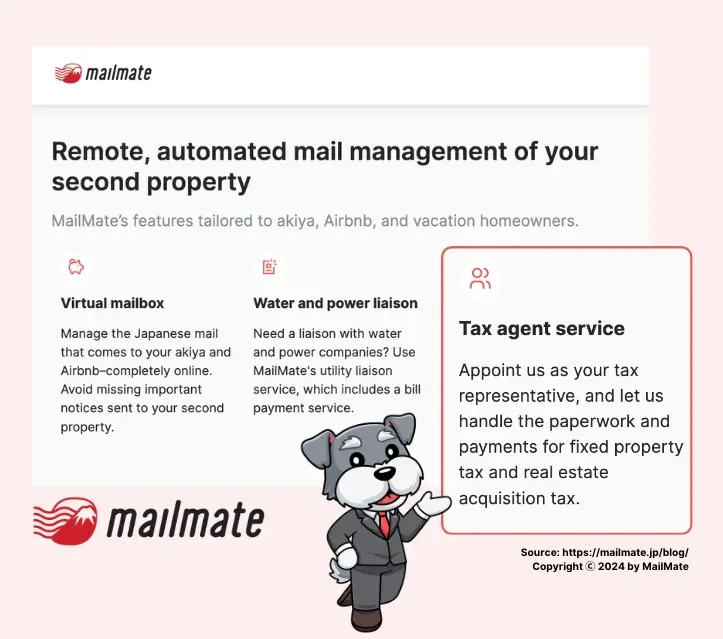
The service includes the following features:
Tax representative for annual real estate tax payments
Domestic point of contact for authorities (required by law)
Bill pay support for property tax payments
Tax notifications with English summaries
A virtual mailbox to receive the mail that arrives at your Japanese property
Manage important property documents and notifications in one place
Other services MailMate offers include utility and Internet setup of your Japanese property!
Founded in 2019, MailMate has simplified property ownership for foreigners living abroad and is an increasingly popular option recommended by users and well-known industry figures.

Additionally, if you use MailMate's tax representative service for property owners, MailMate will take care of filing the tax representative form with the relevant tax office on your behalf.
Navigate Japan's tax system with an experienced tax representative service tailored for foreign property owners!
Spending too long figuring out your Japanese mail?
Virtual mail + translation services start at 3800 per month. 30-day money-back guarantee.