


Best eSIM for Japan in 2026: Compared for Tourists, Digital Nomads, and Residents


Japan has excellent mobile coverage, and an eSIM is now the easiest way to get connected the moment you land. But with dozens of eSIM providers on the market, from global marketplaces like Airalo and Saily to specialists like Ubigi and Mobal, the best eSIM for Japan depends entirely on your purpose and how long you're staying.
This guide covers both sides of that question: the best Japan eSIM options for short-term visitors and what residents, digital nomads, and long-term stayers need to know, including why a Japan eSIM will never give you a real Japanese phone number.
What is an eSIM, and does your phone support it?
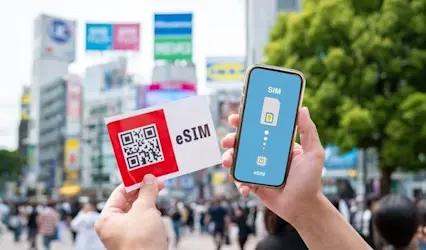
Simply put, an eSIM (embedded SIM) is a digital SIM card built into your phone.
Instead of physical SIM swaps at the airport, you scan a QR code or tap a link, and a data connection loads onto your device in a few minutes. No physical sim card, no tiny tray tool, no local network shop visit required.
Most phones released since 2018 support eSIM, including the iPhone XS and later, and most Android flagships from Samsung, Google, and others from the past few years. Apple has gone further on recent US models: the iPhone 14, 15, 16, and 17 sold in the United States are eSIM-only, with no physical SIM tray at all. Older phones, and any phone still locked to a home carrier, may not support eSIMs, so it's worth checking both before you buy a plan.
To check if your phone is eSIM compatible, go to your phone settings:
- On iPhone, Settings > Cellular > Add eSIM;
- On Android, Settings > Network & Internet > SIMs.
If you see the option, your device is eSIM compatible.
Because an eSIM sits alongside your existing SIM, you can keep your home number active for calls and texts while your Japan eSIM handles data. Many phones released in the last few years also let you store multiple eSIMs at once, which is useful if you want a data-only plan for this trip and a Japanese phone number eSIM for a longer stay.
Activation comes in two forms. QR code activation means scanning a code sent by email, usually before you fly. App-based activation means downloading the provider's app, creating an account, and buying the plan directly from your phone.
Both take under five minutes once you're set up.
Best eSIMs for Japan in 2026: Comparison table
Here's how the major Japan eSIM options stack up before we get into the detailed reviews.
| Provider | Best For | Data & Price | Japanese Phone Number |
|---|---|---|---|
| Airalo | Budget-friendly short trips | 1GB to 20GB fixed, or unlimited plans up to 30 days, from $4.00 | No |
| Saily | Flexible data plans with privacy extras | 1GB to 30 GB fixed, or capped "unlimited" tiers, for $3.99 | No |
| Ubigi | 5G travelers who want Docomo's rural reach | 3GB to 10GB fixed, unlimited monthly plans, from $7.50 | No |
| Mobal | Anyone who needs a real Japanese number | 1GB to 100GB fixed, monthly or short-term, from roughly $11/month | Yes (070/080/090) |
| IIJmio | Residents with a Residence Card | 2GB to 20GB monthly, from roughly ¥850/month | Yes, with a Residence Card |
Airalo

Airalo is the eSIM market's best-known name, and for good reason. Their Japan plans connect to the SoftBank and KDDI/au networks, providing reliable coverage across Tokyo, Osaka, and Kyoto, with somewhat thinner reach in rural Hokkaido.
Fixed data plans run from 1GB (3 days, from $4.00) up to 20GB (30 days, around $25), and unlimited plans are also available, though they carry a fair usage cap of roughly 3GB per day before speeds drop to around 1Mbps.
Installation is app-based: download the Airalo app, pick your plan, and scan the QR code that appears after payment. Airalo also sells global eSIM and Asia-region bundles if Japan is just one stop on a multi-country trip itinerary.
Best for: first-time visitors who want a well-reviewed, easy setup process with strong city coverage.
Verdict: a dependable, if not the cheapest, all-rounder. Its unlimited pricing rose sharply in early 2026, so fixed data plans are now the better value for most short trips.
Saily

Built by the team behind NordVPN, Saily is one of the most affordable eSIM plans for Japan, starting at $3.99 for 1GB over 7 days. Data plans go up to 30GB over 30 days, and its "unlimited" tiers actually give you a set daily data allowance (commonly 5GB per day) before throttling to a slower speed, so treat the word "unlimited" as a soft cap rather than a literal one.
Saily connects mainly to the au network, and its app includes a virtual location feature similar to a VPN, plus an ad blocker and web protection at no extra cost. This makes it a favorite for remote workers who want privacy tools bundled with their data connection.
Best for: budget travelers and remote workers who want fixed data options plus built-in security extras.
Verdict: excellent value on paper, but check the fine print on "unlimited" plans before assuming unlimited high speed data for the entire trip.
Ubigi

Ubigi operates as a full network operator rather than a reseller, and it connects to both KDDI/au and NTT docomo, which has the largest network coverage of any carrier in Japan. That makes Ubigi a strong choice if your Japan travel plans include the Japanese Alps, Hokkaido, or anywhere off the main tourist corridor. Independent speed tests have clocked Ubigi at an average of around 164.65 Mbps, solid though not the fastest option on this list.
Plans range from 3GB over 15 days (from $7.50) to 10GB over 30 days (around $16.50), plus unlimited data plans from $25 for 7 days (25GB at full speed, then throttled) up to a $45 monthly subscription for heavy data users. Ubigi also supports Windows 10/11 laptops and other devices, so you can share one account across a phone and a laptop for remote work.
Best for: travelers heading to remote areas or anyone who wants NTT docomo's coverage without a Japanese phone number.
Verdict: consistently rated among the most reliable local Japanese networks for actual rural connectivity.
Mobal

Mobal is the exception to the data-only rule. Alongside data-only eSIMs, it sells a Voice+Data eSIM that comes with a genuine Japanese phone number (070, 080, or 090), not a virtual number. You only need a passport to apply, no Residence Card required, which makes it the fastest legal path to a local phone number for a digital nomad or long-term visitor.
Data-only plans run on the KDDI/au network, with fixed 8, 16, and 31-day tiers between 3GB and 100GB. The Voice+Data line runs on NTT docomo, which covers over 99% of Japan's population, and monthly data allowances start small and scale up to 50GB. International roaming for the phone number costs an added monthly fee if you need to keep receiving Japanese SMS codes while abroad.
Best for: anyone who needs a real Japanese phone number for banking, apps like Mercari, or business registration without waiting for a Residence Card.
Verdict: not the cheapest eSIM for Japan by the gigabyte, but the only mainstream option that solves the phone number problem for short-to-medium stays.
IIJmio (local option)
IIJmio is one of Japan's largest MVNOs (mobile virtual network operators), and it's what many residents actually use once they've settled in. Its data-only SIMs and eSIMs require no ID at all and run on the NTT docomo network. Its Giga Plan starts at roughly ¥850 per month for a small data allowance, scaling up to around ¥3,000 for 20GB, which is a fraction of what tourist eSIM plans cost per gigabyte over the long run.
The catch: IIJmio's Voice SIM and Voice eSIM, the versions with a Japanese phone number, require a Residence Card for identity verification, and the entire sign-up flow is in Japanese only. That rules it out for tourists and most digital nomads.
Best for: residents with a Residence Card who want the cheapest possible long-term data connection and phone number.
Verdict: unbeatable value once you're eligible, but not an option until your immigration paperwork is settled.
Tourist eSIM vs. Resident SIM: What long-term stayers need to know
A tourist eSIM only carries data, and it doesn't come with a Japanese phone number attached. For a standard 90-day visa-free stay, that rarely matters, since Google Maps, messaging apps, and video calls all run fine over a data connection alone.
It starts to matter the moment you need a local number for something official. Verifying a Japanese bank account, passing ID checks on Mercari, registering on a government portal, or signing up for a delivery app all expect a real 070/080/090 number tied to your identity, something a data-only eSIM simply can't provide.
Since April 2026, Japan's Ministry of Internal Affairs and Communications has also required a passport or Residence Card for every SIM and eSIM purchase, so even a short-term plan now comes with an identity check attached.
Japan's Digital Nomad Visa runs into this exact same limitation, just stretched out longer.
It grants a six-month stay with explicit remote work rights, in theory plenty of time to get properly set up. But the visa doesn't issue a Residence Card, and a Residence Card is what carriers require before they'll hand over a phone number.
So, what should you do?
The right move depends on your timeline. Leaving within 90 days or working remotely on the Digital Nomad Visa? A data-only eSIM covers everything you need.
Planning to stay longer? The goal becomes a proper Japanese SIM contract with docomo, SoftBank, au, or an MVNO like IIJmio or Mintsim, once a Residence Card is in hand. Until that card arrives, pairing a registered address with a phone number is what actually gets a bank account or app verification working.
How to choose the right Japan eSIM for your trip
Different trip lengths call for different plans. Here's a quick decision framework:
- Visiting for 1 to 2 weeks: Try Airalo or Saily. They are the cheapest and most flexible options for short trips, and either the fixed data plans or the small unlimited plan will comfortably cover navigation and instant messaging through Tokyo's vibrant cities.
- Visiting for 3 to 4 weeks: Ubigi's unlimited data plans offer better value at a higher duration, and its docomo network access matters if your itinerary includes a bullet train ride out to the countryside.
- Digital nomad staying up to 90 days: Mobal, so you have a Japanese number for account verifications while your data needs stay covered on the KDDI network.
- Moving to Japan or staying 6+ months: skip the tourist eSIM altogether and get a proper local carriers contract.
- Running a business in Japan: you need a registered Japanese phone number, not a data-only eSIM, since banks, tax offices, and clients will expect a real 070/080/090 line tied to a business address.
👉Read also: A Complete Japan Area Code Guide: Calling To & From Japan
How much data do you actually need?
Light use, maps, messaging apps, and occasional social media typically run 1 to 2 GB per week. Add video calls, streaming, or hotspotting a laptop for remote work, and daily data limits of 1GB or more are realistic. As a rule of thumb, a 10GB fixed data plan covers a two-week trip for most travelers without hitting a wall, while heavy data users or anyone tethering other devices should budget for 20GB or an unlimited plan.
How to set up your Japan eSIM (step-by-step)
- Purchase your plan and receive your QR code by email, ideally a few days before your upcoming trip.
- Open your phone settings and navigate to Cellular > Add eSIM (iPhone) or Network & Internet > SIMs (Android).
- Scan the QR code or tap the activation link if you're using an app-based provider.
- Set the new eSIM as your data line, and keep your home SIM active for calls and texts.
- Turn on data roaming for the new eSIM line specifically, this step trips up more travelers than any other.
- Check your APN settings if data doesn't connect within a minute or two; most providers list the correct APN in their setup email.
- Activate on arrival at Narita, Haneda, Kansai, or wherever you land, and you should have a data connection before you've cleared the terminal.
eSIM vs. Pocket WiFi Japan
Pocket WiFi is the other option travelers weigh before an eSIM, and the two solve different problems.
A pocket WiFi is a physical router you rent, pick up, and return, usually at the airport or by mail. It creates its own WiFi network that multiple phones, tablets, and laptops can join at once, which makes it a natural fit for a family or group trip splitting the cost of one device rather than buying separate eSIM plans for each person.
An eSIM wins on almost everything else. There's no device to carry, charge, or return, no deposit, and no queue at a rental counter. Most eSIM plans also cost less per gigabyte than pocket WiFi rental once you compare a full trip's data usage, and setup takes minutes instead of a counter visit. The tradeoff is that an eSIM only serves the one phone it's installed on, though most providers let you turn on a mobile hotspot to share your data connection with other devices if needed.
For a solo traveler or business traveler, an eSIM is the simpler and usually cheaper choice. For a group of four sharing one data connection to avoid buying four separate eSIM plans, pocket WiFi can still work out cheaper, provided everyone is willing to stay within a few meters of the router and remember to charge it each night.
Frequently asked questions
Can I use an eSIM in Japan?
Yes. Japan has excellent 4G and 5G coverage, and all the major esim providers, including Airalo, Saily, Ubigi, and Mobal, work reliably across the country, with some regional differences in speed depending on the local network you connect to.
Does Airalo work in Japan?
Yes. Airalo esim plans are among the most popular choices for Japan travel, connecting to the SoftBank and KDDI/au networks, with fixed data plans and unlimited options available for trips of any length.
Can I get a Japanese phone number with an eSIM?
Most tourist esim plans are data-only and don't include a local phone number. Mobal is the main exception, offering a real 070/080/090 number with just a passport. For a full local phone number tied to a registered address, look at a SIM contract or MailMate's phone number service.
Is eSIM better than a physical SIM card in Japan?
For tourists, yes. There's no physical sim card to collect or return, and you can activate before you even land. For residents, a local SIM contract from a provider like IIJmio usually offers better long-term value and includes a Japanese phone number once you have a Residence Card.
Do I need a Japanese phone number for my stay?
If you're visiting for tourism, no. If you're opening a bank account, registering a business, or using Japanese apps and services that require SMS verification, yes, and a data-only eSIM won't cover that need.
Is there a free eSIM plan for Japan?
A few esim apps offer a small free plan under 1GB so you can test the connection before committing to a bigger data plan. For an actual trip, though, you'll want a paid plan sized to your expected data usage.
Does eSIM work at Japanese airports?
Yes. You can activate most esim plans before you land so you're connected immediately at Narita, Haneda, Kansai, or wherever you arrive, without needing to find a SIM counter or WiFi first.
Does an eSIM work on the bullet train (Shinkansen)?
Generally, yes. Coverage along the main Shinkansen corridors is strong thanks to extensive coverage from Japan's local network operators, though speeds can dip briefly through mountain tunnels between stations.
How do overseas roaming fees compare to buying an eSIM?
Overseas roaming through your home carrier is almost always more expensive per gigabyte than a dedicated japan esim, and daily roaming fees can add up fast on a longer japan trip. A prepaid eSIM purchased in advance is the more reliable and predictable way to stay connected.
In closing
For most trips to Japan, a data-only eSIM from Airalo, Saily, or Ubigi will comfortably cover your navigation, messaging, and browsing needs at a fraction of the cost of overseas roaming. The one thing no tourist eSIM can do is give you a working Japanese phone number, and that gap only matters once you're opening a bank account, registering a business, or planning to stay past the 90-day mark.
If your trip is turning into something longer, whether that's a Digital Nomad Visa stay or a full move, the phone number and address pieces are worth sorting out before you land, not after.
MailMate helps exactly at that second stage, pairing a real Japanese phone number with a registered address for people who don't yet have a Residence Card. Get in touch with MailMate to see how it fits your situation.
Spending too long figuring out your Japanese mail?
Virtual mail + translation services start at 3800 per month. 30-day money-back guarantee.